
Body Image Therapy
If mirrors, photos, clothing, or intimacy trigger shame or self-criticism, we’ll help you rebuild confidence and self-worth – without diet-culture pressure, and with support around you.
- Evidence-informed therapy: Practical support for negative body image and appearance anxiety
- Whole-person approach: Body image, self-esteem, and food/weight behaviours where relevant
- Confidential, non-judgemental support: A safe place to talk openly
DO ANY OF THESE FEEL FAMILIAR?
Read through the list below – if any of this resonates, we can help you take the next safest step.
- Feeling distressed by your reflection, or avoiding mirrors altogether
- Avoiding photos, video calls, social events, or dating because of appearance worries
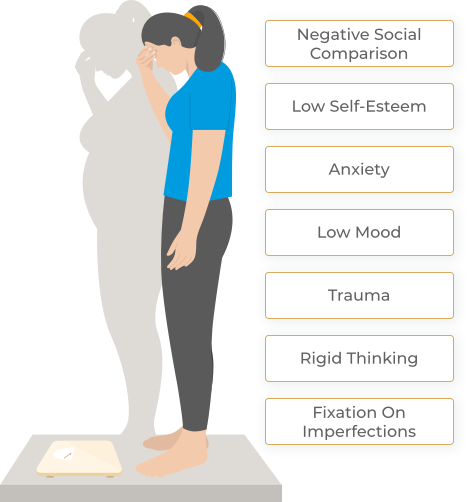
- Body checking, comparing, reassurance-seeking, or feeling stuck in “flaw-finding”
- Feeling “bigger” even after weight loss, or never feeling “enough”
- Clothes shopping, holidays, gyms, or intimacy triggering anxiety or shame
- Food and exercise being driven by body worry rather than health or enjoyment
RECLAIM YOUR SELF-WORTH
Many people wrestle with feeling trapped by negative thoughts about their body, which can lead to anxiety and emotional distress. Body image therapy can help you break free and rediscover your self-worth.
- Improved self-esteem: Learn to see yourself beyond appearance and build confidence in who you are
- Healthier relationship with food: Reduce food rules and guilt when body image drives eating behaviours
- More comfort in relationships and intimacy: Less avoidance and self-consciousness in real-life moments
- More self-compassion: A kinder inner voice and less harsh self-criticism
GETTING STARTED
A good starting place is often therapy – to understand the history of your body distress and begin unpacking the thoughts, perceptions, and beliefs that are keeping you stuck. From there, if your eating or exercise behaviours need more support, we can add structured nutritional guidance to help you build balanced routines and reduce shame-driven patterns. As you progress, we’ll coordinate support around you so you’re not trying to piece it together alone.
BOOK A FREE 20-MINUTE DISCOVERY CALL
Choose a time for a confidential, no-pressure call.
We’ll listen, understand what’s been going on, and help you clarify the safest next step – including whether you’d benefit from therapy, nutrition support, or more specialist/integrated care.
Confidential • No pressure • Clear next steps
How It Works
Step 1 — Book a free call
Choose a time that works for you. It’s confidential and there’s no pressure to commit.
Step 2 — Free 20-minute discovery call
Tell us what’s been going on and what support you’re looking for. We’ll gently check what feels most important right now and whether we’re the right fit.
Step 3 — Clear next steps + clinician match
We’ll recommend the safest next step and keep the plan simple (therapy and/or nutrition first), then match you with the right clinician. If we think another service is safer or more appropriate, we’ll tell you.
Watch (0:57): Sarah from our Client Services team explains what happens on the free discovery call.
Prefer to enquire first? Send us a message
FEES & PRICING
Prefer to review pricing first? Explore our clear fees and package options.
HOW WE HELP – PRACTICAL, COMPASSIONATE THERAPY
Here are some ways body image therapy can support you – we shape the type of therapy to match your specific needs.

BODY IMAGE THERAPY
We work with the thoughts, feelings, and behaviours that keep body image distress going – self-criticism, avoidance, checking, comparison, reassurance-seeking, and fear of judgement – so you can feel more present in life.

BUILDING CONFIDENCE
We help you rebuild identity beyond appearance: values, boundaries, self-compassion, and confidence in real situations (photos, clothes, social events, intimacy).

NUTRITION GUIDANCE
If body image is driving dieting, bingeing, or rigid rules, we can support a steadier, less reactive relationship with food – and coordinate nutrition support where helpful.

JOINED-UP CARE
Your support is coordinated so you’re not piecing it together alone – one clear plan, with the right clinician(s) involved at the right time.
WeightMatters is part of the HealthMatters Group
TRUSTED, CONFIDENTIAL SUPPORT
Many people tell us the hardest step is reaching out – these are a few words from clients about what it was like to be supported.
“After 38 years of diet culture, disordered eating, and poor body image, I finally feel optimistic about healing my relationship with food and my body – without ever dieting again.”
– Laura
“I spent years dieting and believing my lack of willpower was the issue… body image issues… Working with James in therapy has been both challenging and transformative.”
– Christina
“When I started, I had no job, no friends, and low confidence. Now, I have a job I love, friends… I feel confident, happy, and free to be myself.”
– Sarah
“Therapy… changed everything… Together, we untangled years of misguided beliefs and diet culture. Therapy has given me the tools and freedom to live a happy, healthy life.”
– Angela
“Making those initial calls is terrifying, so it’s really lovely to have a kind person on the other end of the line… makes all the difference.”
– Milly
Selected feedback from WeightMatters clients. Individual experiences vary.
MEET NICKI – A STORY OF HOPE & AGENCY
Nicki shares how support helped her feel more confident, more present, and less controlled by food and body worries.
JACK – DOES THIS SOUND FAMILIAR? Avoiding mirrors and photos, feeling “not good enough,” and losing confidence in work, relationships, or intimacy.
Jack’s story is one many people recognise – body image distress quietly shaping daily life decisions.
- Mirror and photo anxiety: checking and avoiding, sometimes both
- Comparison: feeling worse after social media, gyms, or certain social situations
- Confidence impact: clothes, events, dating, and intimacy feeling loaded
- Food and exercise pressure: behaviours driven by shame rather than wellbeing
- Isolation: withdrawing or hiding how much it’s affecting you
- Readiness for support: wanting relief, confidence, and a kinder inner voice
TRAPPED IN A BODY IMAGE LOOP
Many people get stuck in a loop: checking → comparing → reassurance-seeking → temporary relief → more anxiety → more checking or avoiding.
Avoiding mirrors and photos can feel protective in the short term, but over time it can make anxiety feel bigger and more limiting. Therapy helps you reduce safety behaviours gently, and build a healthier relationship with your body and appearance.
WARNING SIGNS & COMMON EFFECTS
Your body image distress may be invisible to others on the outside – but inside it can take a serious toll on your mind, relationships, and daily life.
Behaviours You Might Notice
- Mirror checking, body checking, reassurance-seeking, or photo avoidance
- Avoiding social events, dating, holidays, gyms, or changing rooms
- Comparing yourself constantly (in-person or on social media)
- Seeking control through strict dieting, “clean eating,” or compulsive exercise
- Clothing becoming stressful (changing outfits repeatedly, hiding, discomfort)
Thoughts & Feelings That Often Come With It
- Shame, self-criticism, or feeling “disgusted” with your appearance
- Anxiety in photos, mirrors, or being seen
- Feeling “not enough” regardless of changes you make
- Low mood, irritability, or emotional exhaustion
- Feeling isolated, misunderstood, or stuck
Many people appear high-functioning on the outside – and still need support.
FAQs
If you’re unsure where to start, but some of the descriptions on this page resonate with your experience, these answers may help – and you can always book a free discovery call to talk it through.
Body image therapy helps you reduce distress about appearance and change the patterns that keep it going (checking, avoiding, comparing, reassurance-seeking, harsh self-talk). The goal isn’t to “love how you look” every day – it’s to feel more at ease and free to live your life.
Not always. Some people have body image dissatisfaction; others experience severe distress consistent with body dysmorphic disorder. Either way, if appearance anxiety is impacting your day-to-day life, we can help you take the next step and signpost appropriately if specialist support is needed.
Mirror checking is a common “safety behaviour.” It can give short-term relief but often makes anxiety stronger over time. Therapy helps you reduce checking gradually and build tolerable ways to cope with uncertainty and self-criticism.
Avoidance can feel protective short-term, but long-term it often keeps fear in place and shrinks your world. Therapy supports a gentle, paced approach so you can feel safer and less triggered over time.
Sometimes people hope weight loss will “fix” body image – but many find the self-criticism and fear simply move to a new target. Therapy focuses on the underlying relationship with your body, self-worth, and comparison habits, so confidence isn’t dependent on constant change.
That’s very common. We can support you to address body image alongside food and weight-related behaviours – and involve nutrition support where helpful – so you’re not trapped in a shame-driven cycle.
Yes. Body image distress often shows up as avoidance, self-consciousness, or fear of judgement. Therapy can help you feel more present, confident, and connected.
Both can work well. Some people prefer online for privacy and convenience; others feel safer meeting in person. We’ll help you choose what’s most supportive for your situation.
Yes. Your enquiry and sessions are confidential. We’ll explain how confidentiality works and when we might need to share information for safety reasons (for example, if there’s immediate risk). In day-to-day terms: you can speak openly and safely, and we’ll be clear about boundaries.
CLINICAL STANDARDS & HOW WE WORK
We follow clear clinical standards so you know what to expect – from confidentiality and consent, to safe next steps and appropriate signposting.
How We Work
- Clinician-led, evidence-informed support tailored to your situation
- Confidential, respectful care with clear boundaries and consent-led communication
- Integrated support where helpful (therapy, nutrition, and medical oversight when needed)
- Collaborative care if appropriate – we can liaise with your GP/consultant, with your permission
- Appropriate onward signposting if you need a different type of support or a higher level of care
- Privacy and data protection – see our Privacy Policy
Safety Note – If you’re feeling at immediate risk of harm or having suicidal thoughts, please seek urgent support via 999/A&E, 111, or your GP.
We follow internal clinical governance and safeguarding standards; details are available on request.
Content owner: James Lamper, Clinical Director
Clinically reviewed by: Dr Natascha Van Zyl, Director of Talking Therapies
Last reviewed: February 2026
RELATED SERVICES
Explore these support options we may recommend as part of your care.
Therapy • Dietitian Support • Nutritional Therapy • Psychiatry • Eating Disorders Support
NEURODIVERSITY POSITIVE PRACTICE
We aim to create a space where every brain is understood and respected – including sensory sensitivities, anxiety, and rigid patterns that can overlap with eating difficulties.
IF IT FEELS EASIER, EMAIL US
Have a question before booking? Leave your details and our Client Services team will reply with a personalised response. Confidential and no pressure.